Why This Analysis?
Crime data does not exist in a vacuum.
The crime statistics in media headlines or political debates today are often framed around individuals who commit acts against their friends, neighbors, or strangers. These narratives tend to focus on personal responsibility or isolated incidents of poor choices. Crime is presented as a series of individual choices rather than an outcome of larger systemic factors. While these stories are sure to grab audience attention, they seem to overlook the broader political, economic, institutional, and social forces at play that influence how crime occurs and is reported as crime statistics.
When approaching our project, this gap between public narratives and the complexity of crime data was our greatest interest. Los Angeles has become one of the nation’s epicenters for debates surrounding crime, police presence, and overall public safety, particularly in the aftermath of the COVID-19 pandemic. Similarly, as political discussions about criminal justice reform intensified, institutional changes within the Los Angeles Police Department (LAPD) reshaped how crimes were documented.
These shifts together opened an important opportunity to examine how crime statistics reflect not only criminal activity, but also the political and institutional systems that shape how crime becomes visible in official data.
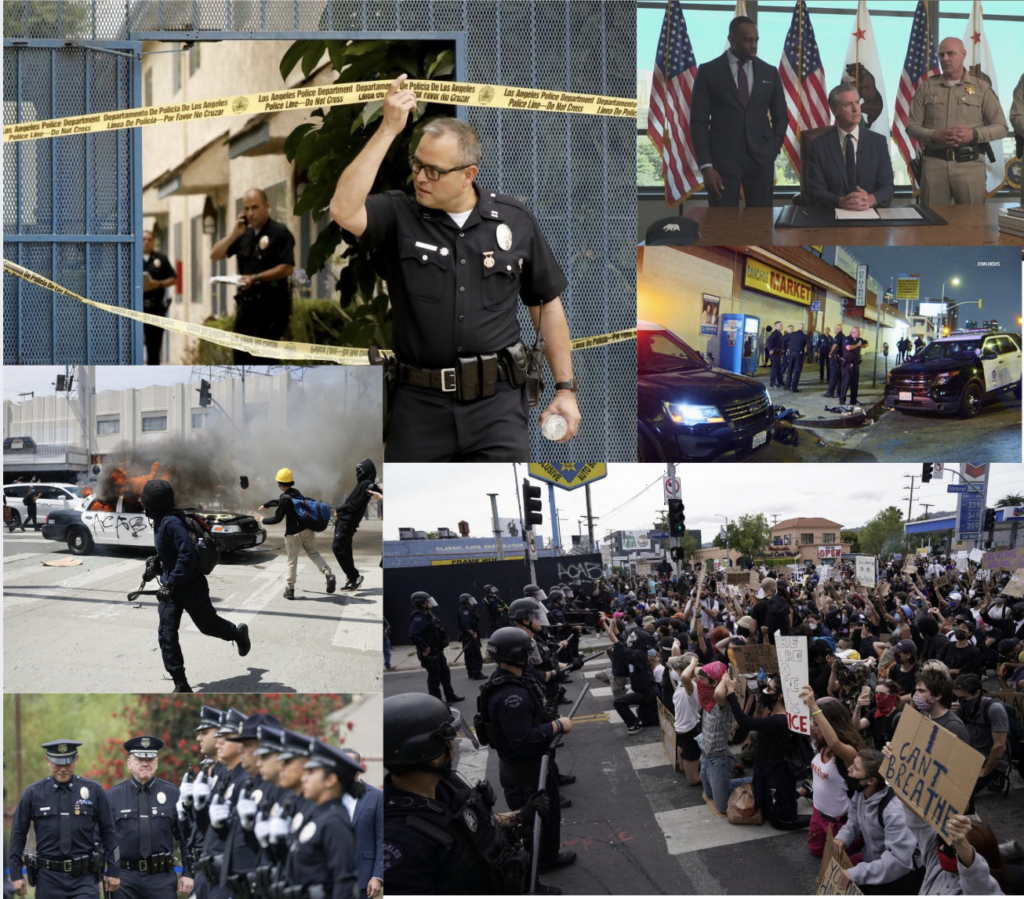
Collage of Los Angeles Police Department and crime images created on Canva.
Images taken from City of Los Angeles, Los Angeles Times, NBC Los Angeles, ABC7 Los Angeles, KTLA & Governing.com