CONCLUSION
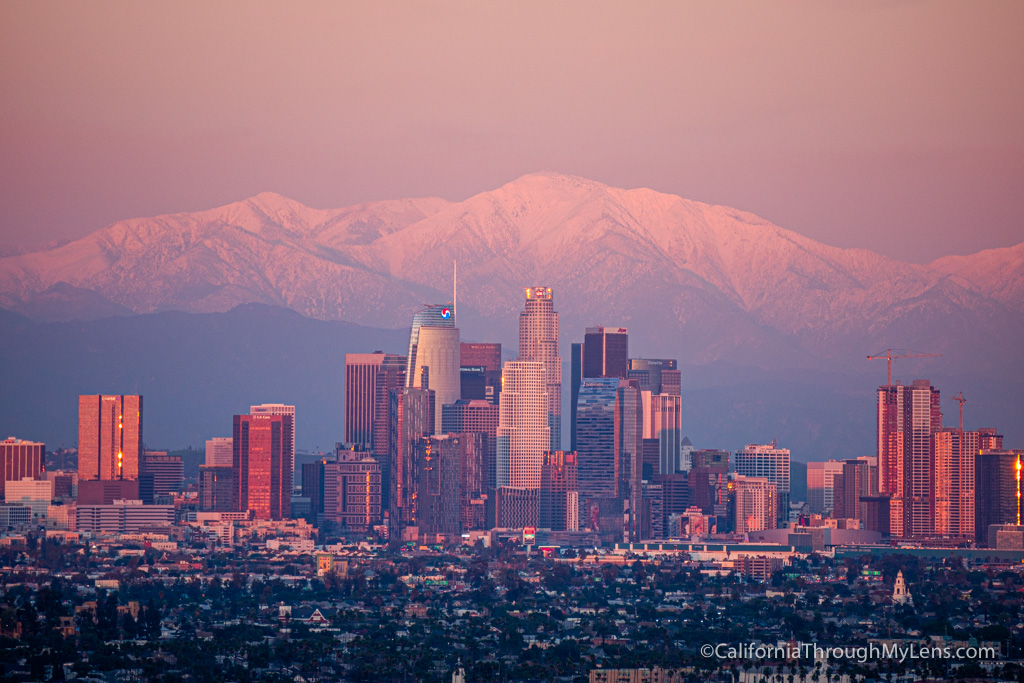
Photo of the Los Angeles skyline with the Santa Monica Mountain range behind. Image taken from Californiathroughmylense.com.
Beyond the Numbers: Crime, Politics, and the Changing Landscape of Los Angeles, 2021–2025
The patterns revealed in this analysis show that reported crime statistics in Los Angeles between 2021 and 2025 cannot be understood simply as reflections of changing criminal behavior or as mere statistics. Instead, they reflect the intersection of major social disruptions, tense debates about law enforcement strategies, and institutional changes in how crime itself is reported.
The COVID-19 pandemic fundamentally reshaped where crime occurred by limiting daily activity to fewer spaces. In 2021, crime was concentrated in residential areas and public outdoor spaces as businesses, schools, and institutions remained closed or restricted. By 2025, as the city reopened, crime redistributed across a wider range of locations, particularly institutional and educational settings. This shift reflects a return to broader social activity rather than a simple change in crime itself.
At the same time, institutional practices influenced how crime presented itself in the data. The Los Angeles Police Department’s adoption of NIBRS-style reporting methods allowed for more detailed documentation of incidents, while increases in case resolution rates reflected both investigative practices and an increased pressure on law enforcement from the police accountability movements. Similarly, public trust in law enforcement shaped victims willingness to report crime as the public’s perception of legitimacy and prior experiences with police were being molded by the tense political climate.
Ultimately, these findings show that crime statistics are not merely neutral measures of public safety or the state of Los Angeles. The changes and patterns observed between 2021 and 2025 represent not just shifts in crime but a city adapting to major social, political, and institutional transformations.