COVID-19 Aftermath & Crime Trends
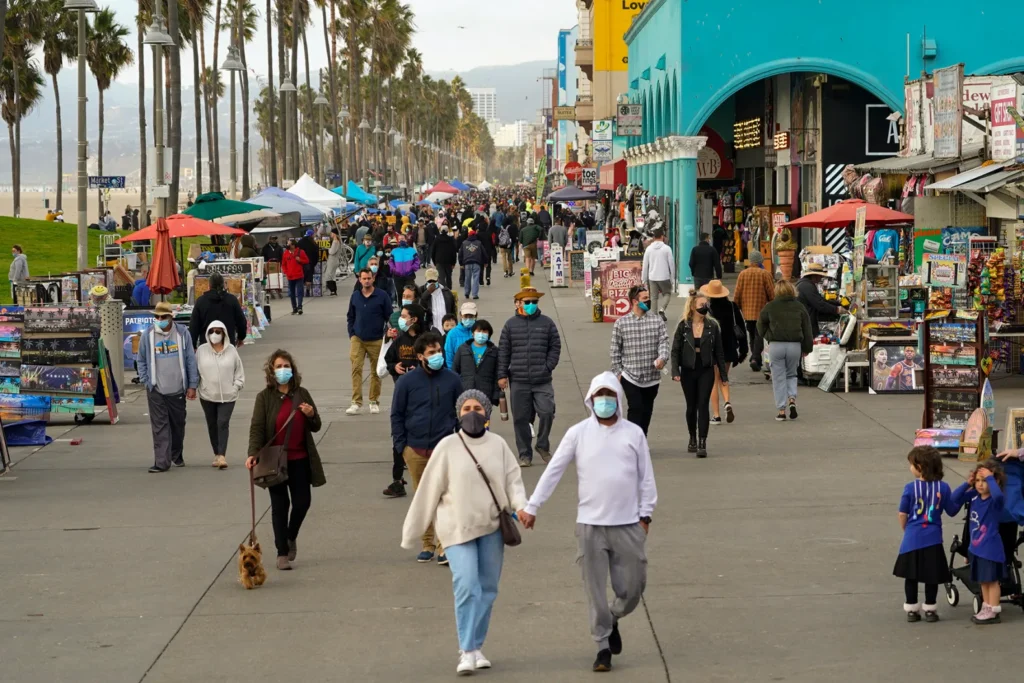
Photo from Dec. 27, 2020. People stroll on the Venice Beach Boardwalk in Los Angeles. Image taken from Spectrum News.
Introduction: Initial “Diagnosis“
The year 2021 represented a unique moment in Los Angeles crime data. The city was still deep in the aftereffects of the COVID-19 pandemic: businesses had closed, foot traffic had dropped, and daily routines had been upended for millions of residents. These disruptions did not simply reduce crime across the board. Instead, they reshaped where crime happened, what kinds of crime were reported, and how severe those incidents tended to be. By comparing our 2021 dataset with 2025 data, we can begin to see how the pandemic warped the landscape of reported crime in Los Angeles and what the return to normalcy looks like in the numbers.
Post-Pandemic Society & Crime Type by Location
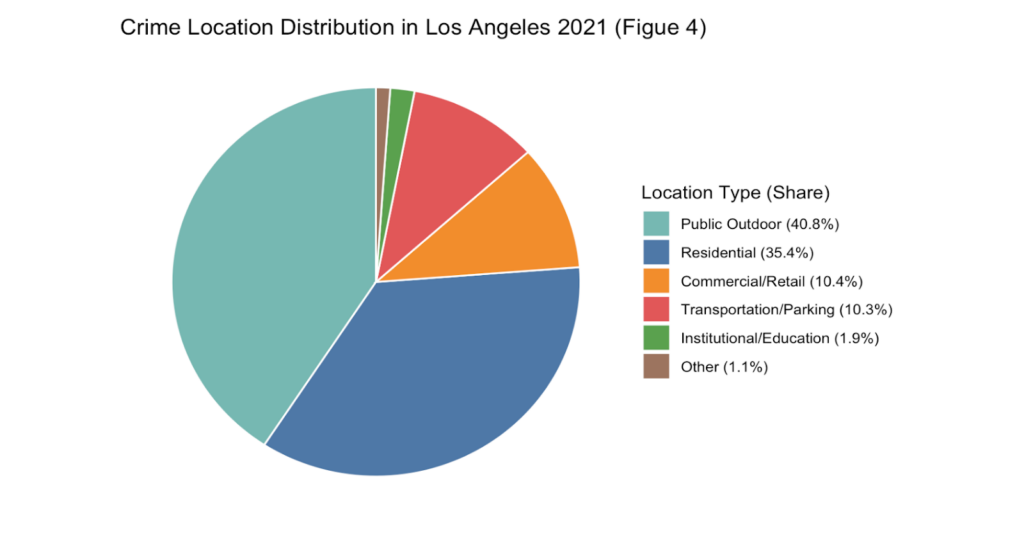
Figure 4: Proportion of each crime location type in 2021 (i.e., outdoor, retail, residential, etc.)
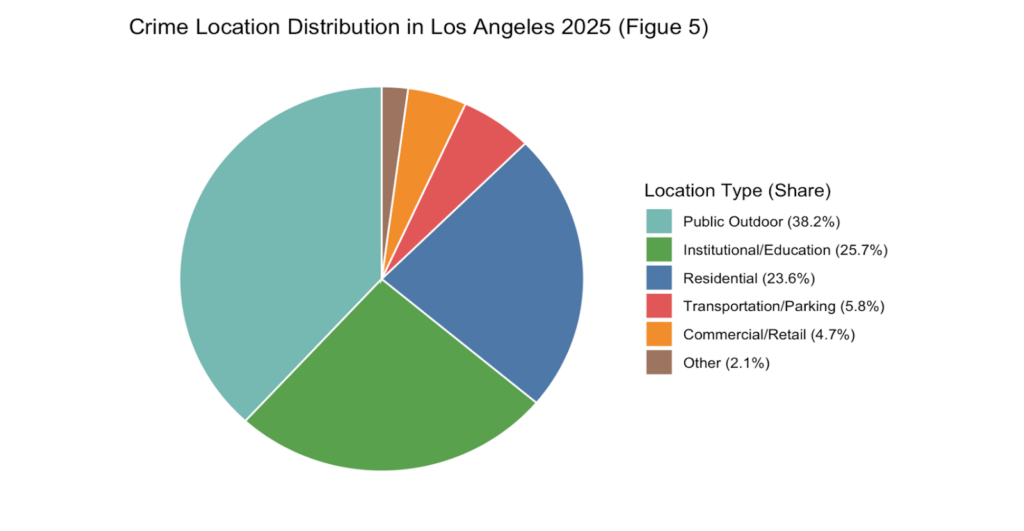
Figure 5: Proportion of each crime location type in 2025 (i.e., outdoor, retail, residential, etc.)
One of the most visible shifts between 2021 and 2025 appears in the physical locations where crimes were reported. Shown in Figure 4, in 2021, public outdoor spaces such as streets, sidewalks, and alleys accounted for 40.8% of all reported crimes, followed by residential settings at 35.4%. Commercial and retail locations accounted for 10.4%, and transportation or parking areas for another 10.3%. This distribution reflects a city where much of public and commercial life had been restricted. With fewer people shopping, commuting, and gathering in institutional spaces, crime concentrated in two main spheres: the streets and people’s homes.
However, as shown in Figure 5, the picture had shifted by 2025. Public outdoor spaces remained the largest category at 38.2%, but the share of crimes occurring in institutional and educational settings jumped from just 1.9% in 2021 to 25.7% in 2025. Residential crime dropped from 35.4% to 23.6%, and commercial or retail crime fell from 10.4% to 4.7%. These changes suggest that as schools, universities, government buildings, and other institutions reopened and resumed full operations, they became sites of reported crime in ways they simply had not been during the pandemic.
The rise in institutional and educational crime is particularly striking. During 2021, when schools operated remotely and many government offices limited in-person services, these locations barely registered in the crime data. Their near absence from the 2021 figures is itself a reflection of how the pandemic hollowed out certain kinds of public space. The return of crime to these settings in 2025 does not necessarily mean institutions became more dangerous; rather, it reflects the fact that people returned to these spaces, and with them came the everyday conflicts, thefts, and disturbances that accompany dense human activity. It is also worth noting that a jump of this magnitude, from 1.9% to 25.7%, may partly reflect changes in how incidents were classified or reported across the two periods, not only shifts in where crime actually occurred. Similarly, the decline in residential crime share from 35.4% to 23.6% likely reflects a rebalancing: when people spent most of their time at home in 2021, the home became the primary site of victimization, and as daily life diversified again, crime spread back across a wider set of locations.
These location shifts carry implications for who experiences crime and how. Research on crime in Los Angeles has consistently shown that Black and Hispanic/Latino residents are disproportionately victims of violent interpersonal crimes such as assault and intimate partner violence, much of which occurs in residential and street settings. The 2021 concentration of crime in exactly these locations suggests that the pandemic period may have intensified the exposure of communities already facing higher rates of interpersonal violence. Intimate partner violence, for example, is closely tied to time spent in the home, and the pandemic’s stay-at-home orders created conditions that researchers have linked to spikes in domestic abuse nationally (Council on Criminal Justice, 2021). The gradual redistribution of crime away from homes and toward institutions by 2025 may signal a partial easing of that pressure, though it does not eliminate the underlying structural factors that produce demographic disparities in victimization.
Post-Pandemic Effect on Crime Severity
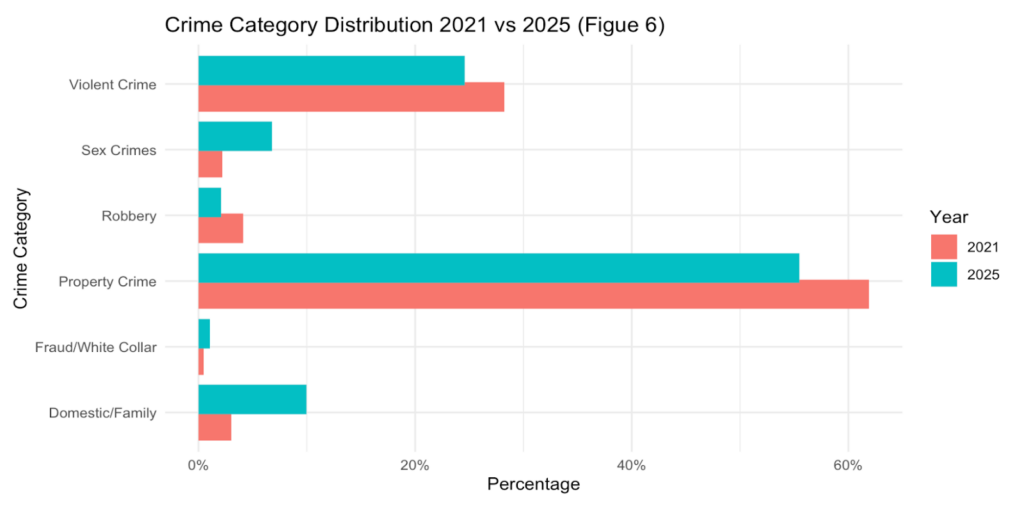
Figure 6: Presence of different crimes by category (i.e., “white collar”, domestic, property, violent, etc.) in 2021 against 2025.
In terms of crime severity, the overall ratio of Part 1 (more serious) to Part 2 (less serious) crimes remained relatively stable across both periods, but the composition within those categories shifted. Based on the data presented in Figure 6, the 2021 data skewed heavily toward assault, battery, and theft, the two dominant crime types in our dataset. By 2025, property crimes in commercial and institutional settings appear to make up a larger share of the total, consistent with the reopening of businesses and public facilities. This suggests that the pandemic did not permanently alter the severity profile of crime in Los Angeles so much as it temporarily compressed crime into a narrower set of locations and types, with violent interpersonal crime holding steady while opportunistic property crime dipped and then rebounded.
Conclusion: Final “Diagnosis”
Taken together, these trends tell a story about how public health crises reshape the geography and character of crime. The pandemic did not create new forms of victimization in Los Angeles, but it concentrated existing patterns into fewer spaces, primarily streets and homes, and may have deepened the exposure of already vulnerable populations to interpersonal violence. The 2025 data shows a city that has largely returned to a broader distribution of crime across locations, but the effects of the pandemic period, particularly for communities disproportionately affected by violence in residential settings, remain visible in the data.

Read Conclusion
Learn how the political, social, and institutional environments in Los Angeles have come together to shape reported crime as more than just individual behavior.